By Elias Thorne, Staff Correspondent (Ret.)
Published: October 24, 2023
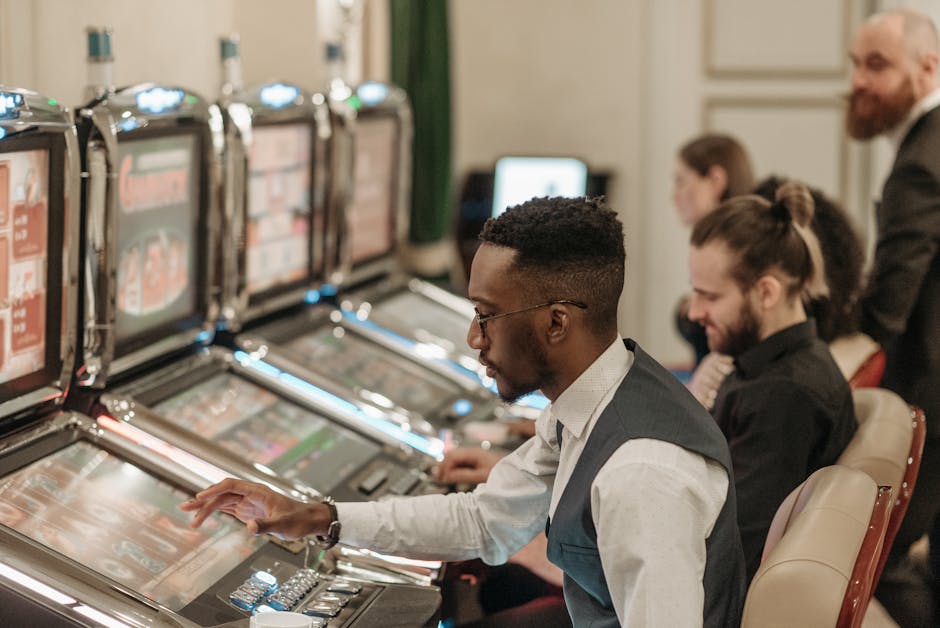
I spent twelve years writing for the Rutland Herald. In that time, I learned that the best way to understand a community isn't through the big ribbon-cutting ceremonies, but by watching what people do in the quiet windows of their day—specifically, the hour between turning off the truck engine and starting dinner. Lately, I’ve been analyzing a trend that has nothing to do with town hall politics and everything to do with how we decompress: the shift toward "low setup" entertainment.
If you have spent any time browsing the web lately, you have likely encountered "guides" about online gaming or leisure activities that feel suspiciously hollow. I recently came across a piece claiming that "everyone is switching to mobile slots," yet it lacked an author name, a publish date, or even a hint of pricing or house-edge details. That’s the sort of content that gives digital media a bad name—it’s designed to capture your attention without providing the transparency you deserve. As someone who has covered both the local rotary club and the arrival of high-speed internet in our valley, I believe in being upfront about what we are actually discussing.
From Place-Based to Access-Based: The Great Uncoupling
In rural Vermont, entertainment used to be "place-based." If you wanted to play cards, you went to the legion hall or a neighbor’s kitchen. It required travel, social coordination, and, frankly, a bit of physical setup. Today, the dynamic has shifted to "access-based." You don’t go to the entertainment; you open a channel to it.
This shift has been fueled by the Federal Communications Commission (FCC)—the government agency responsible for regulating interstate and international communications—pushing for broadband expansion. As connectivity improved in corners of the state that were previously "dead zones," the definition of "leisure time" changed. We stopped needing a physical destination to find a bit https://xn--toponlinecsino-uub.com/the-new-porch-light-how-digital-leisure-is-reshaping-rural-vermont-routines/ of fun, and instead, we began looking for ways to fill the gaps in our schedule without the friction of preparation.
Why "Minimal Setup" is the Goal
Why are people gravitating toward games that require zero setup? It comes down to decision fatigue. After an eight-hour shift, the last thing many people want is a game that requires learning a complex UI (User Interface—the visual layout that allows you to interact with a program) or setting up a lobby with friends. We want "minimal setup fun."
This is where mobile-optimized interfaces come in. A mobile-optimized interface is a website or application designed specifically to be intuitive on a small screen, meaning the buttons are thumb-friendly and the navigation doesn't require a map. Companies like MrQ (mrq.com) have capitalized on this by creating environments where you don't need to install clunky software or manage hardware; you simply open the browser and arrive at a point of play.
The Mechanics of Chance: Understanding RNG
Whenever I write about digital gaming, I feel it is my duty to explain the math, because mystery is where bad actors hide. Many people wonder if these quick, mobile-based games are "fair." The backbone of these systems is the RNG, or Random Number Generator.

An RNG is a computational algorithm—a set of rules followed by a computer—that generates a sequence of numbers which corresponds to symbols on a reel. Crucially, these systems are designed to be independent and unpredictable. They do not "know" if you won the last round, and they certainly don't "owe" you a win after a string of losses. When you hear marketing jargon about "hot streaks," ignore it. It’s not a revolution in gaming; it’s just software doing exactly what it was programmed to do: provide a random outcome.
Comparing Engagement Models
To help visualize why different people choose different methods for after-work entertainment, I’ve put together this quick breakdown of how these formats differ in terms of friction:
Format Setup Effort Social Requirement Primary Benefit Console Gaming High (Updates, Hardware) Variable Immersive Storytelling Organized Sports/Clubs Very High (Commute, Gear) High Community Building Mobile-First Slots (e.g., MrQ) Minimal (Browser-based) Low Convenience/Time-EfficiencyThe Accessibility vs. Convenience Question
As a former feature writer, I have to ask: Is this about convenience or access? In some cases, it’s both. For someone working the night shift in a remote area, an app that works on a standard 4G signal provides access to leisure that might otherwise be unavailable. However, we must be careful not to overpromise outcomes. These platforms are designed for entertainment—not as a financial strategy. The "low friction" aspect is a double-edged sword; because it is easy to start, it is also easy to lose track of time.
The "after work quick entertainment" niche isn't a cultural revolution. It’s a response to a world where our attention spans are fragmented. When we are tired, we look for the path of least resistance. We want a reward—a moment of suspense—without the heavy lifting of a project or a complex social negotiation.
A Note on Quality Information
If you find an article about your leisure time that doesn't tell you who wrote it or when it was updated, keep your guard up. Reliable reporting, whether it’s in the Rutland Herald or on a tech blog, should always provide context. If a site is trying to sell you on the "miracle" of a new gaming app https://enyenimp3indir.net/beyond-the-flicker-why-unpredictable-is-actually-the-goal-of-digital-slots/ without explaining the underlying tech (like RNGs) or the terms of use, they aren't treating you like a reader—they are treating you like a lead.
Summary of Best Practices for Digital Leisure
- Verify the Source: Look for an author byline and a recent publication date. Understand the Tech: If it’s a game of chance, ensure you know what an RNG is and how it functions. Define Your Limits: Low-friction entertainment is designed to be accessible. Set a time limit for yourself before you open the browser. Prioritize Accessibility: Choose platforms that are transparent about their mobile-optimized interfaces and security protocols.
At the end of the day, there is nothing wrong with wanting a quick, simple way to unwind. Just remember that the tools we use for fun are tools nonetheless. Know how they work, know who is providing them, and keep your expectations grounded in reality. That’s the only way to ensure that your after-work leisure remains yours, and not the other way around.